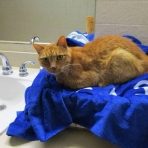
Waynesboro, VA, June 12 — Cats are among the world’s most cherished companions, but when allowed to roam freely outdoors, these non-native predators become a deadly threat to native wildlife. The Wildlife Center of Virginia is calling on all cat owners to take a simple yet powerful step to protect wildlife and their pets: keep cats safely indoors.
Each year, the Center admits thousands of wild animals suffering from injuries, many of which are caused by free-roaming domestic cats. In 2025 alone, the Center has already admitted 202 animals attacked by cats. Unfortunately, most of these patients did not survive. Cat-related injuries are often far more serious than they appear. Even minor bites or scratches from cats can introduce bacteria that are fatal to small mammals, birds, and reptiles.
“Even with skilled veterinary care, the odds of survival are low,” says Dr. Karra, the Center’s Director of Veterinary Services. “And the reality is, we only see a small fraction of the damage. Most animals caught by cats are killed and never make it to us.” A landmark 11-year study published in The Journal of Wildlife Management in 2016 underscores the scope of the issue. Drawing on patient records from the Wildlife Center from 2000 to 2010, researchers found that 14 percent— nearly 3,000 animals—were confirmed victims of cat attacks.
Outdoor cats also face serious risks themselves. Vehicles, predators, toxins, disease, and severe weather all pose constant threats. Indoor cats, by contrast, live significantly longer and healthier lives. “We’re not anti-cat—many of us, myself included, are devoted cat owners,” says Dr. Karra. “But we can’t ignore the significant impact cats have on wildlife. Keeping cats indoors protects native species and keeps our pets safe. It’s truly a win-win.” 1800 South Delphine Ave / PO Box 1557 / Waynesboro VA 22980 ● 540.942.9453 ● wildlifecenter.org
What Can You Do?
- Keep your cat indoors, or supervise outdoor time with a harness or in a secure “catio.”
- Prevent accidental escapes by ensuring screens and doors are secure.
- Visit our website to learn more about the issue and how to transition an outdoor cat to a safe indoor lifestyle.