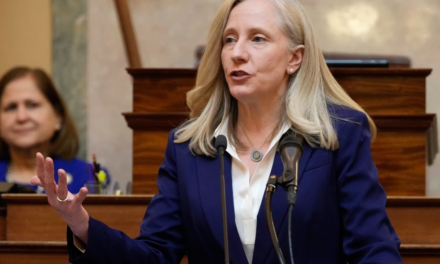
RICHMOND, VA — Governor Abigail Spanberger today announced the 2026 School Performance and Support Framework (SPSF) results, providing school leaders, educators, families and caregivers, and policymakers with a snapshot of the performance and progress of the more than 1,800 elementary, middle, and high schools across the Commonwealth from the 2025-26 school year. The Spanberger Administration’s release of these results comes two months earlier than last year’s release, giving families an earlier picture of performance and allowing schools to more quickly drive resources and support to students.
Following its first school year in use, the Joint Legislative and Audit Review Commission (JLARC) recommended critical improvements to the SPSF in a December 2025 report. The Spanberger Administration — through the Governor’s issuing of Executive Order 4, signing of HB643, and actions by the Virginia Department of Education — is working to implement recommended improvements to provide more data, increased accuracy, and greater transparency to educators, students, and families than the previous system.
As recommended by JLARC, the Spanberger Administration adopted a new method of measuring student growth to be applied in the 2025-26 school year. The new methodology rewards schools for helping any student grow significantly, regardless of their starting point.
“As Governor and as a mother of three school-aged daughters, I am working to make sure that every child feels safe, supported, and prepared to thrive during their years in Virginia’s schools and into their futures. These results show that while we continue to address remaining challenges, we are well on our way toward that being every child’s reality,” said Governor Abigail Spanberger. “Our educators go above and beyond to set every student up for success. Parents and families deserve to know their child is receiving an outstanding education in our Commonwealth. That’s why we are focused on using this data to target investments to schools where students need it most. It’s why we are putting students first.”
Many of Virginia’s Title I schools, which serve students in low-income households, demonstrated significant progress and student success. Nearly one third of these schools, 16 out of 49 eligible schools — the highest proportion ever — exited out of Comprehensive Support and Improvement (CSI) status, the strictest level of federal monitoring designed to close academic gaps.
The SPSF looks at each school’s academic performance and growth, student readiness and attendance, and — for high schools — students’ preparation for employment, enrollment in a postsecondary institution, and enlistment in the military. Each of those four components are measured by multiple indicators, such as student proficiency on state tests, student growth year to year, graduation rates, absenteeism, and other factors. Schools are then awarded a composite score that correlates with a performance category: Distinguished, Meets Expectations, Approaching Expectations, or Needs Intensive Support.
“It is clear that our superintendents, school leaders, educators, and families are working hard daily to make sure all of Virginia’s children thrive, and there is much to celebrate regarding student achievement,” said Secretary of Education Dr. Jeffery Smith. “We also recognize that there is still considerable work to be done to ensure that the School Performance Support Framework meets the needs of our students, schools, families.”
Growth illustrated in the new data includes:
- More than 99 percent of schools are now fully accredited, meaning that they meet all the Commonwealth’s required health, safety, staffing, compliance, and planning requirements.
- Schools increased their overall SPSF scores by roughly 5 points on average.
- 4 in 10 schools (38 percent) improved their overall performance category rating
- Improvement, particularly at the elementary school levels, was driven in part by student progress on the Growth indicator.
- 3 out of every 4 schools in the Commonwealth saw drops in chronic absenteeism.
Click here for the full Statewide School Performance and Support Framework (SPSF) & accreditation results.
“Over the last several years, policymakers, school divisions, and local leaders have made significant investments in great teachers and quality instruction, deepened family supports and student engagement, and enhanced pathways and programming that set students up for success beyond graduation,” said Superintendent of Public Instruction Jenna Conway. “The true purpose of an accountability system like the SPSF is to create the conditions for school improvement, and drive more resources to the students, educators and schools that need them most. We’re pleased today not only to be sharing these results, but to be turning accountability into action.”
The Virginia Department of Education (VDOE) is this Friday opening a $26.7 million grant funding opportunity for schools serving Virginia’s highest-needs students. In opening the School Improvement Grant application cycle, VDOE will distribute federal school improvement funds to schools and students in greatest need. This funding will enable those schools to invest deeply in the instructional resources that they need to make a significant impact on their students. Additionally, based on this year’s results, VDOE will be launching a new, state-funded pilot improvement network for schools that were identified for Targeted Support and Improvement (TSI) through this process and may be facing achievement gaps with specific student groups. The network will provide teams of leaders from these schools with valuable tools and training to meet the needs of all students.
While improvement — for systems and for schools — takes time, this year’s results provide VDOE, division and school leaders, educators, families, and lawmakers with vital information to continue on a steady trajectory of growth and progress. The Spanberger Administration and VDOE will act with urgency to support schools that need additional help, while continuing to strengthen and refine the SPSF as implementation continues.