RICHMOND — In the wake of multiple crashes involving first responders and roadside professionals, the Virginia Department of Transportation (VDOT) and Virginia State Police (VSP) are emphasizing this Crash Responder Safety Week – Nov. 2 to 6 – the critical need for drivers to slow down, move over, and protect the lives of emergency responders. The national theme of the week is “Slow down, move over. Lives are on the line!”
Traffic incident response is a collaborative effort engaging law enforcement, emergency medical services (EMS), fire and rescue, public works, towing and recovery, transportation, and other disciplines. VDOT and VSP employees and contractors are regularly dispatched to many of the same incidents. Though these professionals are trained and experienced at clearing crashes and incidents, they put their lives on the line every time they respond and depend on drivers to slow down and move over to keep them safe.
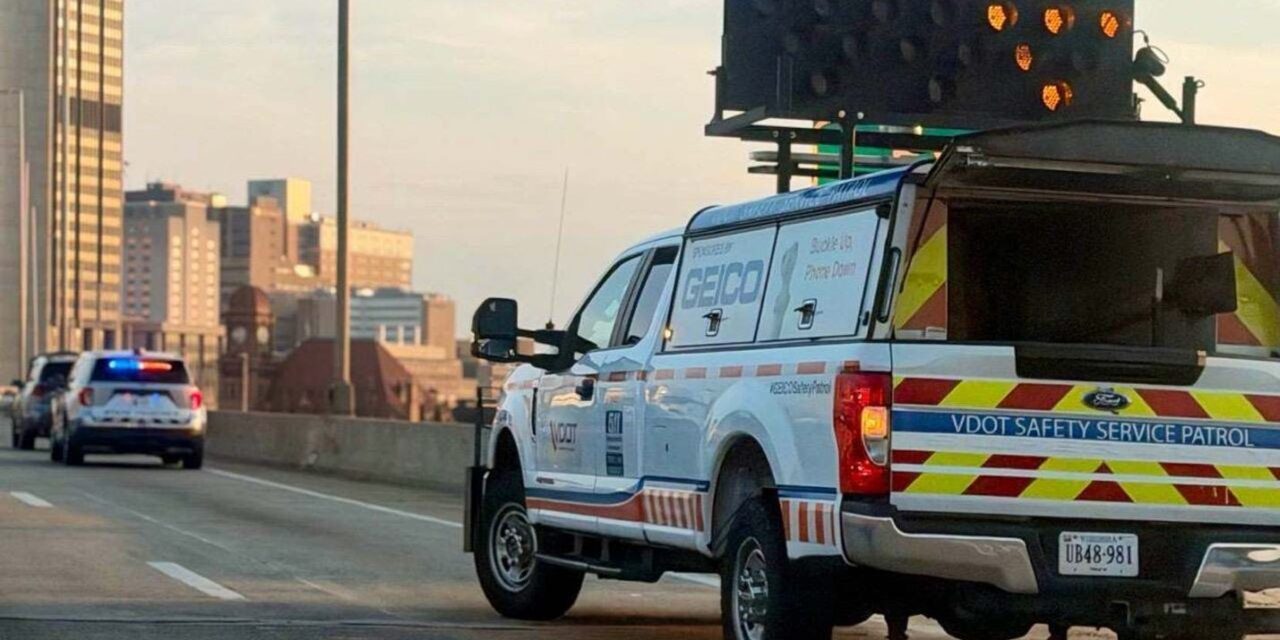
Along with VSP troopers and in addition to VDOT’s Incident Management Coordinators (IMC), VDOT’s Safety Service Patrol (SSP) contractors, employed by AECOM, provides services such as managing crash incidents, clearing roadway debris and providing assistance to drivers stranded without fuel or with a flat tire along major interstates in Virginia. VDOT crew members across the commonwealth also regularly support localities with crashes and incidents.
In September, VDOT lost the life of SSP operator Clayton Fitchett. On Sept. 19, Fitchett went to assist VSP on a report of a person sleeping on an Interstate 64 overpass in Newport News. While Fitchett was outside of the vehicle, a passing car struck him and fled. Fitchett died. During the same incident, a VSP vehicle was struck, thankfully the trooper was unharmed. This incident is still under investigation.
Only six days later, on Sept. 25, a vehicle traveling east on Route 460 struck the rear of a line of three VSP vehicles after a traffic stop was conducted. All three VSP vehicles were damaged, and all three troopers made it home unharmed. However, the vehicle operator, a 22-year-old male, sustained serious injuries during the crash and was transported to a hospital.
Other similar incidents have been reported throughout the year, highlighting the risks first responders and roadside workers face and the challenges they encounter while trying to keep motorists safe.
On May 2, a trooper and an SSP operator responded to a disabled vehicle on Interstate 64 in Newport News. While they were directing traffic, the SSP operator was struck by a secondary vehicle and sustained life-threatening injuries. The trooper and IMC on scene immediately assisted the SSP operator, who was then taken to a hospital for treatment and survived with life-altering injuries.
“Every crash scene is an active and often dangerous work zone. Our troopers, local law enforcement officers, safety service patrol personnel, firefighters, EMS providers, and tow operators are focused on helping those involved, clearing the roadway, and restoring safe travel for everyone. We’re asking drivers to do their part by slowing down, staying alert, and giving responders the space they need to work safely,” said Virginia State Police Lieutenant Colonel Norman E. Gray, Sr.
“Virginia’s Move Over Law exists to protect the men and women who put themselves in harm’s way to help others,” he added. “When you move over or slow down, you’re not just complying with the law, you may be saving a life. The few seconds it takes to exercise caution can make all the difference for the responders working to keep others safe.”
In the last five years, two more SSP operators lost their lives. Michael Freeland died after assisting a disabled car on Interstate 95 in Prince William County on Sept. 6, 2025. A passing vehicle lost control, crossed all lanes of the roadway, and struck Freeland and the driver of the disabled car. The driver of the disabled car was injured. And on Oct. 8, 2023, Craig Boone pulled over on Interstate 64 in Hampton at the Big Bethel overpass to assist a disabled vehicle. The driver of the vehicle that struck and killed Boone was sentenced to five years in prison and had a blood alcohol level over the legal limit.
“This Crash Responder Safety Week, we remember the lives of Clayton Fitchett, Michael Freeland and Craig Boone,” said VDOT Commissioner Stephen Brich. “Incident responders both representing VDOT and beyond work to keep the roadways safe and traffic moving, and it is beyond tragic when three people just doing their jobs on the road were unable to go home. Nearly all crashes are preventable, and we need drivers to do better to keep first responders safe as they perform their duties.”
Last year, VDOT responded to more than 18,500 crashes on more than 59,000 miles of state-maintained roads, along with thousands of other incidents, such as disabled vehicles and roadway hazards. Since 2021, VDOT crash responders have responded to more than 127,000 crashes, and SSP operators have responded to more than 1 million incidents.
Crash Responder Safety Week is aimed at educating the public on the importance of driving safely when approaching a crash or other roadside incident. Drivers should comply with Virginia’s Move Over Law, which requires them to make a lane change or slow down when approaching any stopped, standing or parked vehicle displaying warning signals, including vehicles driven by highway first responders. A violation could lead to a reckless driving charge. Reckless driving is a Class 1 misdemeanor in Virginia that can result in a fine of up to $2,500 and a maximum prison term of one year.
If drivers are in a crash involving property damage and there are no injuries, they should move out of the travel lanes and, preferably, to a protected area such as a parking lot to exchange information. The side of the road is a very dangerous place. If you are unable to drive your vehicle and must leave your car, keep away from traffic and walk on the right side of the road. Crossing a highway or trying to stop traffic is dangerous, especially at night or when visibility is low. Additional resources can be found on VDOT’s website on what to do if you are in a crash.